Sowing Scenes and Reaping Applause: Tannis Kowalchuk’s Agri-Cultural Revolution
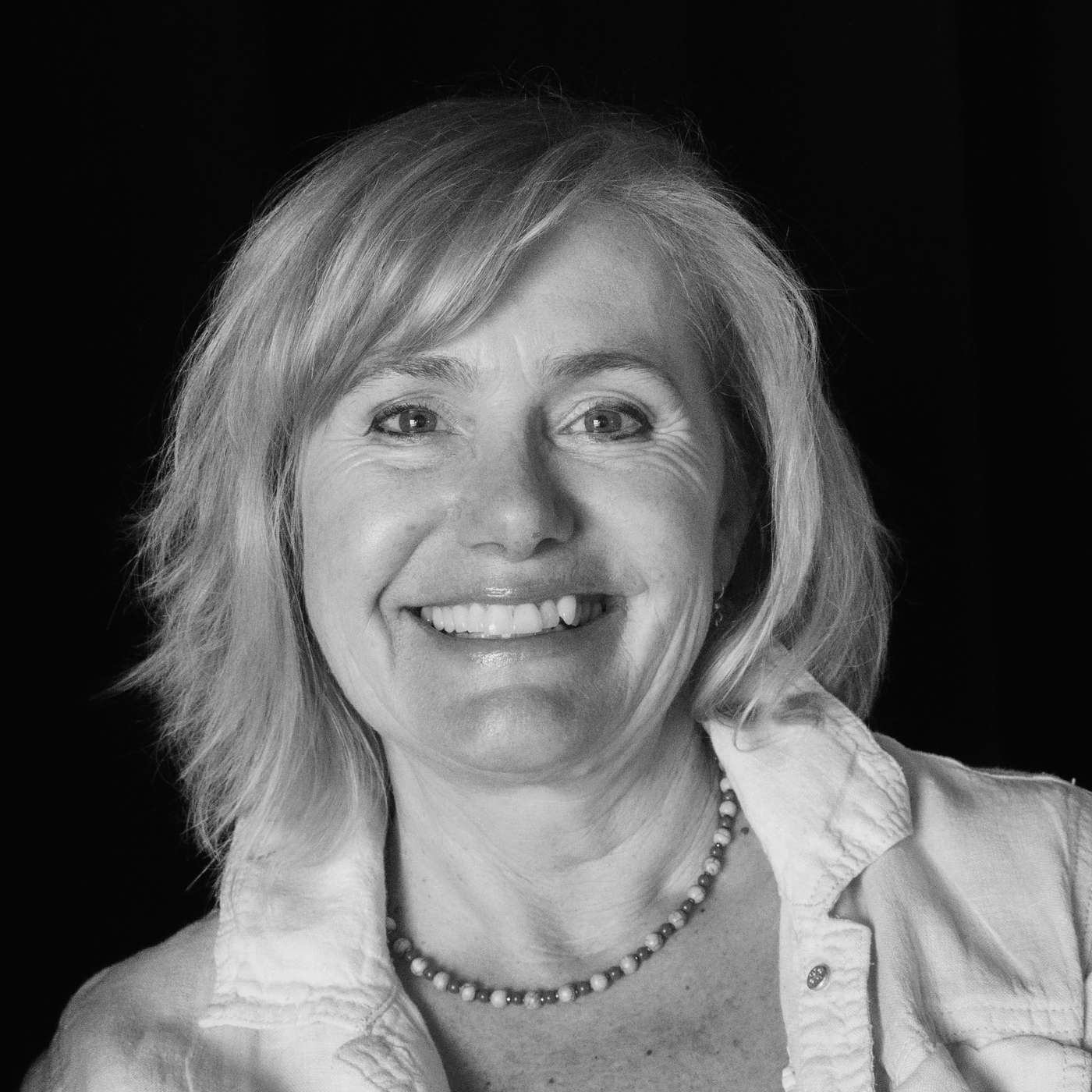


Most people spend a lifetime trying to balance their passions.
Tannis Kowalchuk planted hers in the same field.
In this episode of HarmonyTALK, host Lisa Champeau sits down with the artistic director of Farm Arts Collective and co-owner of Willow Wisp Organic Farm along Pennsylvania's Delaware River.
A performer at heart, Tannis always knew she belonged on a stage. Then she met a farmer. What followed was a remarkable journey that combined two seemingly different worlds into one life's mission.
Today, Tannis is an actor, director, producer, farmer, educator, and climate advocate whose work has transformed a working organic and solar farm into a destination for original theater and community dialogue.
Her productions are performed right on the farm, where audiences gather among fields, barns, and open skies to experience stories rooted in the realities of rural life. This summer, she directs Johnny Appleseed: An Historical Fantasia, the Farm Arts Collective's newest original production.
During the conversation, Tannis shares how farming changed the way she sees the world, why climate change has become one of the most urgent topics facing agriculture, and how theater can help people understand challenges that affect all of us.
As she explains:
"Climate change and new weather events are the talk of the farming community. First, these devastating events affect farmers, then they affect the eaters. And the eaters are all of us."
Tannis also offers thoughtful advice for aspiring artists, emphasizing the importance of mastering your craft, building relationships with mentors and collaborators, and staying committed to the work.
Insightful, inspiring, and deeply original, this episode explores what happens when creativity, purpose, and community all take root in the same place.
@Farm Arts Collective
@Willow Wisp Organic Farm
@Lisa Champeau
Tannis Kowalchuk:
I love giving things to people. It just makes me feel good, and I'm happy with what I have and make. And I feel very full of gratitude that I'm able to still be the thing I wanted to be when I was a kid, which is a theater person, and now a farmer and connect to the land and to the beautiful flowers we grow, and and then to make people happy with it.
Lisa Champeau:
Welcome to HarmonyTALK, a podcast of conversations with people who turn their visions into reality, their passions into purpose. My guest today is Tannis Kowalchuk, an actor, producer, organic farmer, and climate activist. She founded the Farm Arts Collective on Willow Wisp Farm in Damascus, Pennsylvania. Now the collective specializes in original productions such as Dream on the Farm, which is a ten year cycle of climate themed plays. This year they're producing Who Was Johnny Applause Tannis can't wait to hear more about that.
Lisa Champeau:
Hello everybody, I'm Lisa Champeau. This podcast is brought to you by A. M. Schuyer, a third generation family insurance business that celebrates and promotes people who dream big and follow through. Tannis joins us from her farm on the Delaware River.
Lisa Champeau:
Welcome, Tannis. It's really good to have you here.
Tannis Kowalchuk:
Well, thank you so much. It's really great and an honor to be interviewed for this wonderful series. It's such a wonderful series. I had a chance to check it all out and my goodness, how eclectic.
Lisa Champeau:
Yes, we do have a real variety of people, but there are a lot of dreamers in this country. I think that my brief description of you and your collective falls short. I'm afraid of all that you encompass and all that you do because your lifeblood obviously is performing, theater pieces literally all over the farm. But the collective also offers workshops and organic food and farming, community meals, and social events. If you're going to let me just for a minute, I have this image in my head that at any given time, a visitor to the farm may see actors in brilliant costumes all over the farm.
Lisa Champeau:
They may see stilt walkers because stilt walking is one of your skills on the farm. They may see a woman in overalls giving a workshop on how to make healthy compost. And they may see your husband Greg and other farmhands harvesting vegetables and herbs and really colorful cut flowers. In other words, I see this amazingly vivid tableau. Am I too far off the mark?
Tannis Kowalchuk:
No, and I think it's really worthwhile maybe just digging down a little bit. Pardon the pun. We can make all kinds of farm puns on this interview if you want. But just to say, what's the purpose of this? Like, what brought this intersection of farming with art making, particularly performing art, arts making with ecology, climate change, and social justice as well.
Tannis Kowalchuk:
Right? And so I think it's definitely the dream and also the passion of me because I was a performer for many, many years. My whole life, I studied theater in Canada. I was part of many wonderful ensembles of more experimental style theater. It's called Devise Theater in the theater profession.
Tannis Kowalchuk:
And then I happened to meet a farmer here in this area and began to reconnect to farming because actually I come from a Polish farming family in Canada. My grandparents and my mother were farmers before they moved to Canada after the second world war. So it was a really nice reconnection for me to meet Greg and then to become involved in his starting a new farm as he was a young professional farmer starting, got his own land. We started Willow Wisp Organic Farm together, and I was then at that point running NACL Theatre in Sullivan County. I was driving there and then farming, learning how to farm.
Tannis Kowalchuk:
I took on the role of doing all the cut flower production and managing all of that, which has grown into quite a big part of the farm, the cut flower production. And I started also making plays about climate change because I was noticing within the farming community how much people were talking about all of the changes and all the risks and all of those flooding and all of the new weather events that we were facing as farmers. Farmers would not stop talking about it, you know? And I was like, wow, this is serious. Climate change is really serious.
Tannis Kowalchuk:
Wow, it's going to affect everyone. First, it affects the farmers, and then it affects the eaters, and we're all eaters. And so I was like, we got to talk about this. So I got this lovely grant from the NEA, this Our Town grant, and I made the big production in 2012 called The Weather Project. And from then on, I've been doing plays with community on the subject.
Tannis Kowalchuk:
And I eventually began the Farm Arts Collective in 2018 to bring it all on the farm. Because I believe that when you're talking about issues of environmentalism and climate change and food security and what are we going to do about taking care of the earth, if you're presenting it on a place that grows the food you eat, it has a really poignant message. So I've not lost my love of theater. I continue to love both the farming life and the theater life. I have a wonderful ensemble, this great group of actors that attracts more actors, younger people, and we're making theater on the farm.
Tannis Kowalchuk:
And so yes, you would see someone in a costume doing some kind of rehearsal or performance, and at the same time, you would also see a workshop or a farm tour, a workshop on solar power, a workshop on composting, a workshop on flower cutting and design, and that kind of thing.
Lisa Champeau:
Well, is a very interesting blend and you've managed to do it very well for many years, but let's just go back for a second. You mentioned Canada and you did discover performance art fairly early on. What drew you to performance art over traditional theater?
Tannis Kowalchuk:
I think I was attracted to theater and I think I just found the most interesting kind of theater. And I wouldn't say I'm a performance artist. I'm in the performing arts. I'm making experimental theater, I think you could say. And so what does that mean?
Tannis Kowalchuk:
It means we don't always start with a play that's been done on Broadway. We don't always start with a Shakespeare, although we've done that too, but it's more like what is coming from the group of actors with whom you are working at that time in that place, in that moment, and that defines the work is who are you working with, what are you thinking about, and what do you want to say about the world? And so that's what defines the theater. And then I was very fortunate to have very interesting teachers in my training in Canada. I had teachers from Europe.
Tannis Kowalchuk:
I had a great teacher from London who worked in the tradition of Mike Lee, the filmmaker. He worked with Mike Lee, and Mike Lee does a lot of improvisation to make his films. So the actors are very much part of the writing process, and the performances are very deep and beautiful. And that was my first, like, kind of, like, more experimental theater experience. And then I worked with a highly, highly physical and experimental troupe that were influenced by the theaters of Wrotowski, the Polish director, and also Eugenio Barba.
Tannis Kowalchuk:
We worked with a Eugenio Barba actor from Odin Theatro. I mean, people don't really know who these people are except if they're in theater, but I was really lucky. I felt very fortunate.
Lisa Champeau:
You definitely call them avant garde.
Tannis Kowalchuk:
Oh yeah, for sure.
Lisa Champeau:
So you mentioned earlier the North American Cultural Laboratory where you co founded the NACL and that's still in Sullivan County and it's still doing exploratory theater, but you left when you met the farmer. What is it that you actually wanted to do differently?
Tannis Kowalchuk:
That's a great question. What I wanted to do differently was to create theater with the people who lived in Northeast Pennsylvania and Sullivan County because I felt that New York you know, NACL was sort of straddling New York and bringing a lot of, like, a professional New York theater to the space in Highland Lake. I felt like theater is a very healing form of of expression and artwork for both the doer and the viewer, and that I felt really this strong idea, this dream that it could help people and help the community if there was an opportunity for engagement in the creative act. And so that was my focus for for Farm Arts Collective, was to make an opening for people who want to be creative because I believe it nourishes mind, body, and spirit, honestly, to be creative. Doing it on a farm, we, again, have this engagement with the food and with nature, and it made so much sense to work very much locally on the levels of farming, art, food, and ecology.
Tannis Kowalchuk:
That's the big difference. It's a local engagement.
Lisa Champeau:
Well, you mentioned theater as healing and I wasn't going to go there yet, I'm just going to mention it now. In 2011, you had a stroke. I know you have a son graduating high school this year, so that must have been pretty frightening for him. He was young for your family. Tell us about that because you turned it into a theater piece, Struck.
Tannis Kowalchuk:
I did. I think actually all of this kind of came from this idea of theater as healing and how do you want to use your time because time is can be suddenly very short. You never know. You know? Like, those brushes with mortality make you realize that you should not waste your time and you should use your energies wisely.
Tannis Kowalchuk:
And so I had a stroke that no one really understands what happened. The only explanation was I was working very physically. I was actually teaching theater training, and I may have done something with my neck. I was doing exercises with the head and maybe tore the lining of my right anterior carotid artery, which became 100% occluded. I'd never had that kind of symptomatic vein, heart thing before.
Tannis Kowalchuk:
You couldn't move or Oh, yeah. I got paralyzed on my left side, 100%. And I started to slur, and then I, like, I literally had lost all feeling in my left side, and I was in the hospital for about a week. I went home and I recovered in about a month.
Lisa Champeau:
A month? Wow, that's pretty fast.
Tannis Kowalchuk:
Yeah. I mean, a month I could move again, okay? And then I had to do more physiotherapy, and I still don't have great feeling in my left side. I can't get food on my face. Can't feel it.
Tannis Kowalchuk:
That's what friends are for. I know exactly. I was like, I have to go back into the theater to make sure I can still act and remember lines, and I did a solo play. I totally, in my opinion, recovered. And it made me think, oh, theater and movement and, like, this application of the part and the mind and the soul and the voice and the bodies, it was so healing to do theater and to move in the in the studio, and so was qigong, actually.
Lisa Champeau:
Do you do qigong on the farm?
Tannis Kowalchuk:
No. But I just started to do it, like, take as many classes as I could or do it online, you know, videos. People do it online. Qigong really helped me. So I like to even keep up a little practice.
Tannis Kowalchuk:
I have this friend, my Vietnamese monk, he doesn't know who I am, but I look at his videos and I do his practice. It's a fifteen minute practice in the mornings as much as I can, and it's really great.
Lisa Champeau:
It's wonderful that you came back from the stroke and embraced theater again. You wrote a piece about A Called Struck. You've written quite a few original pieces, including Decompositions, which I happen to see, and you perform with a pile of compost on the stage.
Tannis Kowalchuk:
Yeah, and I actually talk about the stroke. I talk about it as one of the events where you face this loss. Decompositions is a solo performance that likens the process of composting to living life and to allowing things to be lost and rot and change. But from it, we always get some form of transformation, you know, like in nature, that's what happens. You toss an old plant in or your leftovers, and it's going to turn into humus compost.
Tannis Kowalchuk:
Well, I like
Lisa Champeau:
the idea of sort of decay and aging, but kind of transforming into the next generation, whether it's a harvest or whatever.
Tannis Kowalchuk:
Nothing is lost. It just is always changing. To accept that as a human, also as an aging woman, wow, if you can really accept that kind of grace, this way they compost, it's very graceful, but it doesn't care. It's just like keeps changing and moving, and it's mixing even. Like, sometimes you'll have something stinky and rotting with something that's a perfect bit of compost in layers, and it's all there.
Tannis Kowalchuk:
So how elegant is that? Well, I'm happy
Lisa Champeau:
to report it did not smell on that stage. Was pretty So comfy you probably learned a lot about it on the farm. Now the farm itself, does it sustain you? Do you eat all the vegetables and herbs and so on? Does it feed everybody living there?
Tannis Kowalchuk:
Yeah. I feed everyone a hot lunch every day. Today's lunch was a frittata. Friday is always frittata using all the leftovers of the week's meals. But, you know, I mean, we have so much land here.
Tannis Kowalchuk:
We we feed a lot of people, not just the farm team, and I feed audiences when they come to the shows or to a workshop. I always have an offering of something from the farm. Like, tomorrow, we have jazz on the farm, and I'm doing a rhubarb crisp. I made that today. And I'm going do a sunchoke soup and a salad.
Lisa Champeau:
That sounds delicious. Let's talk for a second about the happenings then. I mean, jazz this weekend is a new initiative. Is it not?
Tannis Kowalchuk:
Well, we started it last year, and it came about because there's this wonderful jazz musician, Will Sowing the Rad, who lives not far. He's on on the New York side in near Calicoon. And he was like, it would be really great to have, like, just a concert because a lot of the jazz musicians around here Tyler Dempsey, he's in Nipah. He was here last year. They they always end up playing in, like, pubs and bars or restaurants around here.
Tannis Kowalchuk:
And so to give the artists an opportunity for, like, a sit down concert where people are just there to hear the music, there's not a lot of bustle and hustle of waiters and cooks and whatnot. You know? It's just, a real, like, focused space for them on this gorgeous farm. You know, I'll have the windows open. It'll look beautiful.
Lisa Champeau:
They love it. Well, let's talk about your climate themed plays, the ten year cycle. What prompted that and what kind of response have you gotten?
Tannis Kowalchuk:
Oh, well, our climate themed plays aptly named as Dream on the Farm. And in fact,
Lisa Champeau:
Is that kind of a play on Dad on the Farm?
Tannis Kowalchuk:
It's not, but this is a book of the first five plays. We're getting it printed as we speak. So So we're gonna have a book of our first five plays, but this is a series of environmental and climate change themed plays that we started in 2020. There had been, one of the big gatherings of climate scientists, and they were really issuing this was the initial warning that if we did not curb our emissions, intensively curb the emissions, that we would rise above 350 degrees, the parts per million of carbon dioxide in the atmosphere, which we have already surpassed.
Lisa Champeau:
When you say we, you mean the world, or you mean The United States, you mean the world.
Tannis Kowalchuk:
The whole world. And so now we have surpassed it. And, you know, like, Bill McKibbin wrote started the 350.org organization around that time. And so I was like, okay. I'm concerned too, and they say we have ten years.
Tannis Kowalchuk:
Why don't we do one play every year to mark this time period and see if that makes any difference and keep the conversation going. It's hard to do something for ten years.
Lisa Champeau:
They're all original plays too, are they not?
Tannis Kowalchuk:
Oh, yeah. We make them. We start making them in January and we premiere them in end of July or early August. Yeah. So this year, we decided we wanted to try to fold in something that we could get some funding from America three fifty.
Tannis Kowalchuk:
So we thought, oh, well, why don't we, like, have Johnny Applause Tannis explore his life, which was really interesting. His life was fascinating because he was definitely the first nurseryman and an environmentalist.
Lisa Champeau:
He encouraged seeds over grafting, think. Something Was that he did? Exactly. The wild trees. He didn't want to graft.
Lisa Champeau:
He didn't
Tannis Kowalchuk:
want to hurt. He was so connected to nature. He was a vegetarian, such an interesting fellow, but at the same time he had amassed a lot of land and he was really ahead of expansion. So he has a kind of like there's an element of him that was definitely capitalist landowner. You know?
Tannis Kowalchuk:
It's fascinating. I think he's quintessentially American, such an individualist, a spiritualist, part of a new religion.
Lisa Champeau:
People don't really know him.
Tannis Kowalchuk:
He's kind of mythical, but he's real. Absolutely. So we're telling this story with an ecological lens about really exploring how his connection to the land informed a lot of the apples that were available. We've lost a lot of varieties, and we're going to talk about that in our play, just how easy it is to lose varieties of food and plant matter. So that's, I think, one of the messages we can deliver with this show.
Lisa Champeau:
Yeah. Have you found over time that the audiences have increased?
Tannis Kowalchuk:
Yeah. Like anything, it takes some time to establish anything like, you know, a restaurant or a space like this that we have now and a new company. But now that we've been doing this now, this will be our seventh performance of Dream on the Farm on Willow Whisp Organic Farm. People are starting to plan their summers. They're like, when is it?
Tannis Kowalchuk:
I'm planning my trip. These are my friends, but it's cool. It's a well known event now in our neighborhood here, and we always get great audiences. I feel like something was working, and we've established that. I don't I don't like, sometimes I can panic and get worried if there's a guest artist, and I can get worried that I'm not going to have an audience for them.
Tannis Kowalchuk:
But for Dream on the Farm, for the most part, I feel pretty secure about our attendance. It's good.
Lisa Champeau:
I know that last year you did something on Milton's Paradise Lost, and you incorporated some Japanese theater techniques. So just give our listeners a little sense of what your productions are. Mean, don't some of them, I won't say travel, but the audience may go to different places on the farm?
Tannis Kowalchuk:
Yeah. Most of these performances move through the farm. There's been a couple that haven't, but for the most part, like last year's show, Paradise Lost, the first half of the show was set inside the theater space. We call it an agricultural center because it's a teaching space, a performance venue. And then the other half was a scavenger hunt around the farm where we were trying to define and collect artifacts and hold on to what paradise means to us.
Tannis Kowalchuk:
So it was like the search for a new paradise. This year, we are going on a kind of mud show. In Massachusetts, when Johnny Applause Tannis There were these traveling mud shows. It was a precursor to the traveling circus and they would come to town and they would be like magicians or a little bit of a circus act or a puppet show or a cabinet of curiosities, a lecture. So this year, what we're doing is we're gonna create a museum of history and curious myth.
Tannis Kowalchuk:
And much like this really cool museum in Culver City, California, it's called the Museum of Jurassic Technology. We wanna create this space like a museum where the audience comes in and they walk around and and there's going to be exhibits everywhere that refer to things they're going to kind of meet on the performance. So an exhibit about Emmanuel Swedenborg, who was this great influence of Johnny Applause Tannis he was a brilliant scientist, but also a spiritualist.
Lisa Champeau:
I think there's even a Swedenborgian. Is it religion?
Tannis Kowalchuk:
Yeah. Swedenborgianism is what a lot of those poets like Thoreau, what Johnny Applause T, what a lot of even some presidents really read him, and I forget which ones, but he was huge influence. So we wanna have an exhibit on that. But then we also wanna have an exhibit on Paul Bunyan and Bill Pecos because those aren't real people, but we kinda wanna mess with, like, what's real, what's not, and, like, have this kind of fun exhibit of a curious history of The United States. America's February.
Tannis Kowalchuk:
Yeah. We did receive America $2.50 money for this performance. Dollars 20,000 we received. So this is a performance that we're going to really embrace the history of America through Johnny.
Lisa Champeau:
Tannis, you mentioned earlier about the flowers, the cut flowers part of what you do on the farm in the farming end. Would you describe a day for me in the life of Tannis Kowalchuk? Because it sounds pretty busy.
Tannis Kowalchuk:
Well, let's say right now I will, on a Monday, do farm maintenance. I do work staking my flowers, planting my flowers, thinning my flowers, weeding my flowers. Then I'll cook lunch for everybody. We have between twelve and fifteen. 15 in high season, 12 right now, we'll get
Lisa Champeau:
a few more. You also have to come up with the menu.
Tannis Kowalchuk:
Yeah, I just cook whatever is in the cooler, honestly. I improvise the whole thing. I think about it in the morning and I make it, and I try to do it within one hour. I don't want to spend more time. I just don't have the time.
Tannis Kowalchuk:
So I do it in an hour and it's fine. It's great. It's delicious. I have great products here. I always cook what we have and I do vegetarian mostly.
Lisa Champeau:
But you're probably busier in the summer than you are in the winter for sure.
Tannis Kowalchuk:
Oh yeah. I'm talking more like now, this is what I'm doing. Then in the afternoon, I'll do the farm arts collective administration. I'm the primary grant writer and money finder. I do the emails.
Tannis Kowalchuk:
I do most of the communications, and then of course the artistic direction, like finding you know, I have a team, like Jess Beverages, one of my team members, Ginny Hack is another one of my team members, and we do a lot of work together. We have our meeting on Tuesday where we do our staff meeting, but my job is mostly kind of leadership of the organization. And then on Tuesday nights and Wednesday nights, we have full rehearsal, like evening rehearsal. So I'll have a full day on the farm or in the office, the administrative offices of Farm Arts. And then Tuesdays and Wednesdays, we have rehearsals.
Tannis Kowalchuk:
We have every three weeks, a Saturday rehearsal for Farm Arts Collective as we're getting ready for Dream on the Farm. And then we have events. So then our weekends are busy with some events. So it's, yeah, it's incredibly busy. Like this time of year, in the summer, I'm working about seventy hours a week at minimum.
Tannis Kowalchuk:
Oh, do you
Lisa Champeau:
love most about what you do? Is that possible to say?
Tannis Kowalchuk:
I'm making things, being creative. I like creating the lunch. I like creating the performances, and I like growing beautiful flowers. And then I like giving it to people, giving the theater, giving the food. I love giving things to people.
Tannis Kowalchuk:
It just makes me feel good, and I'm happy with what I have and make. And I feel very full of gratitude that I'm able to still be the thing I wanted to be when I was a kid, which is a theater person. And now a farmer and connect to the land and to the beautiful flowers we grow and and then to make people happy with it and to get that kind of, like, exchange of that feedback. I feel very satisfied, so I don't mind putting the energy everything Everything worth doing takes so much energy.
Lisa Champeau:
So the flip side of that really is what's the hardest thing to do? Probably balanced by all the great things.
Tannis Kowalchuk:
Yeah. The hardest thing to do is to say no and to disappoint people that you can't always do everything. I'm pretty good with keeping in touch with my family and like I haven't like been a bad daughter or mother. I feel like I've been able to keep doing that in sister.
Lisa Champeau:
And you have a son too. You have a son and he's graduating high school this year as I mentioned, so you've been a mother as well as a daughter.
Tannis Kowalchuk:
Yeah. Oh, my son is just incredible. He's going to go to Queen's University in Canada and study economics, philosophy, and political science. And he wore a cheetah print suit to prom at Honesdale High School. And I was like, wow, he has like that kind of confidence.
Tannis Kowalchuk:
Pretty incredible.
Lisa Champeau:
I think I saw a picture of that. Yes. He, he looked amazing.
Tannis Kowalchuk:
He did. I was proud of him. I always thought he was more like, I'll try to conform, kind of stay in the crowd, but he really took that like, I'm going to stand out for prom. I love that. I was like, Oh yeah, you are my kid.
Lisa Champeau:
He picked up something from you, right? Yeah. Well, if someone were listening to this conversation and never heard of Farm Art's Collective or seen one of your extraordinary pieces, how would you describe your work and invite them to come see the collective in action?
Tannis Kowalchuk:
As far as a theater performance goes, I would say it's extremely authentic. It's extremely engaging physically, orally, musically, and visually, and you'll get intellectual stimulation because we're talking about important issues, be it war or women's rights or ecology or relationship to the land and each other. So there's gonna be these, like, levels of of engagement and counter. And it's entertaining too because I had, like I love having humor in the performances, and visually, I love good costuming. And we have a beautiful backdrop here.
Tannis Kowalchuk:
We have a beautiful farm and then now a beautiful space. They'd also get some food at the end because I always want people to stick around and talk about the work or talk with each other. So I'm really trying to build a community here. I get over and over again one comment. Thank you for welcoming me.
Tannis Kowalchuk:
I feel very welcome here. There's a lot of, like, single people who will come here and feel okay, if you know what I mean. Like, sometimes you don't always feel comfortable going by yourself somewhere, but a lot of single people come here of all ages and feel pretty comfortable. We have a welcoming space and I train people to always say hello to our guests and ask them how they are for goodness sakes. Then we invite people to stay afterwards to talk to each other and eat.
Tannis Kowalchuk:
And eating is really a good bonding experience, you know.
Lisa Champeau:
So do you have any words of wisdom for anyone who might want to pursue a career in original theater? I don't know about meshing it with farming. That's such an unusual, such a unique path, but certainly original theater today.
Tannis Kowalchuk:
Yeah, I think you want to work with people that you trust because you want to be able to like have collaboration that is like honest and trustful and fun and have a good leader because collaboration always needs good leadership because someone at the end of the day has to say, I think we have to do it this way. After everyone's given their opinion, let's go in this direction. And you want to have a good leader, and you also want to have some skills, and you want to be able to have a form to develop craft. Do you want to keep working on your craft? And so you need to have a plan.
Tannis Kowalchuk:
So probably need mentors then. Yeah, absolutely. You need teachers, great teachers. Teachers, leaders, and then collaborators you trust. And if you're not having fun, don't do it.
Lisa Champeau:
That's really good advice. Well, thank you so much for being with us, Dennis. I really appreciate it. I wish you luck with all your endeavors this summer. Johnny Appleseed, it looks like it's going to be a great production.
Lisa Champeau:
I hope to check it out actually since it is in this area where our podcast is recorded. And anybody who wants to find out more about FarmArts Collective can visit farmartscollective.org.
Tannis Kowalchuk:
I'm just really happy to have this conversation with you, and I just want to invite anyone who's interested in coming to the farm to visit to just reach out to me. My email's on our website, so I'm very open and willing to share, go for a walk, have a cup of tea, whatever.
Lisa Champeau:
That sounds great. Thank you so much, Tannis. This podcast has been brought to you by A. M. Skyre, a third generation family insurance business that promotes and celebrates dreamers and doers.
Lisa Champeau:
I'm your host for today, Lisa Champeau. Thanks for joining us. Talk to you next time.